
@dr.pongbonetalk อาการปวดหลังเป็นอาการที่เราพบได้ในชีวิตประจำวันกันอยู่แล้วครับ แต่จะรู้ได้ยังไง ว่าปวดแบบนี้เป็น office syndrome หรือเป็นมะเร็งกันแน่ วันนี้ หมอโป้งจะมาเล่าให้ฟังครับ ถ้ามีอาการปวดหลังร่วมกับอาการเหล่านี้ ต้องรีบเจอหมอนะครับ!! #TikTokUni #ปวดหลัง #ออฟฟิศซินโดรม ##หมอกระดูก##หมอ##แพทย์##หมอโป้ง##คุยเฟื่องเรื่องกระดูก##มะเร็ง##มะเร็งระยะสุดท้าย##มะเร็งตัวร้าย##ผู้ป่วยมะเร็ง@หมอโป้ง คุยเฟื่องเรื่องกระดูก @หมอโป้ง คุยเฟื่องเรื่องกระดูก @หมอโป้ง คุยเฟื่องเรื่องกระดูก ♬ A comical long who seems to be chasing me(845594) - WataSound
Chronic back pain may not just be a common ailment but could be a warning sign of serious bone-related diseases. This type of back pain might indicate a risk of cancer. While back pain is a common occurrence in daily life, it can sometimes signal serious health issues, especially when related to bones. Understanding the difference between typical back pain and concerning symptoms is crucial for our health care.
Back Pain : When Should You Worry?
Back pain is a common symptom that’s usually not serious. However, in some cases, it may indicate health problems that require attention. Understanding the difference between typical back pain and concerning symptoms is essential.
Common causes of back pain include:
- Injuries to bones, muscles, or ligaments
- Age-related spinal degeneration
- Herniated discs
- Degenerative disc disease
- Spinal curvature disorders
In severe cases, back pain could signal serious conditions like bone cancer, spinal infections, or abdominal aortic aneurysms. However, these cases are rare.
When to consult a doctor about back pain
- Severe back pain that doesn’t improve after 2-3 days of rest
- Back pain accompanied by high fever
- Numbness or weakness in legs or feet
- Problems with bladder or bowel control
- Unexplained weight loss
- Back pain following a severe accident
Bone cancer is rare but severe, so it’s important to regularly check your health, especially if you have risk factors such as being over 50, having a family history of cancer, or experiencing other symptoms like weight loss, loss of appetite, or pain that worsens at night.
The difference between common back pain and concerning symptoms
Common back pain usually improves with rest, hot or cold compresses, and lifestyle changes, typically getting better within a few days or weeks. However, some types of back pain may be warning signs of serious health problems. The key warning signs are known as CRAB:
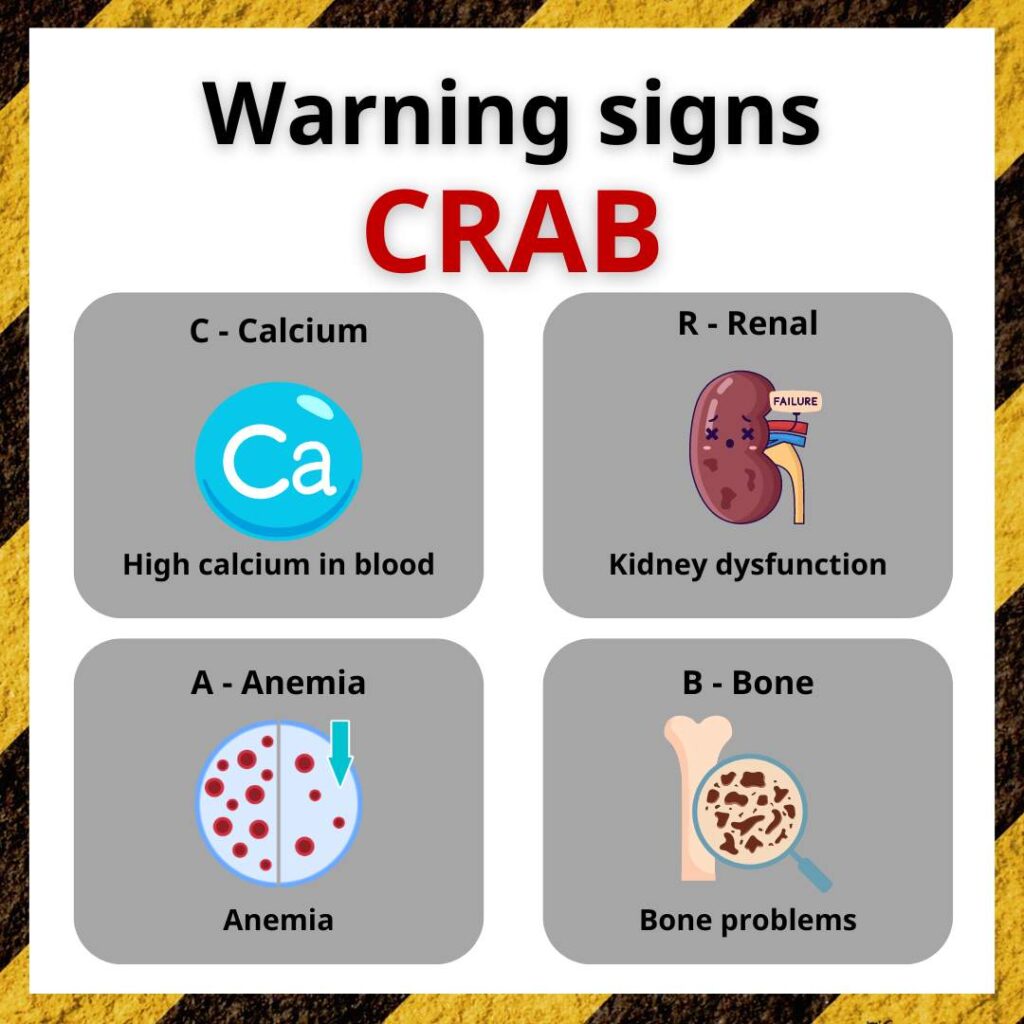
- C - Calcium: High calcium in blood
High calcium in blood (Hypercalcemia) is a crucial symptom indicating bone destruction releasing calcium into the bloodstream. Symptoms may include:
- Excessive thirst
- Frequent urination
- Constipation
- Loss of appetite
- Fatigue
- Confusion
- Nausea and vomiting
- Muscle pain
If you experience these symptoms along with unexplained back pain, consult a doctor to check your blood calcium levels promptly.
- R - Renal: Kidney dysfunction
- This warning sign occurs when abnormal protein accumulation blocks kidney tubules, leading to kidney dysfunction. Symptoms include:
- Swelling, especially in legs and feet
- Easy fatigue
- Back pain in the lower back or sides
- Decreased urination or unusually foamy urine
- Itching
- Weakness
- Difficulty breathing
- Confusion
- A - Anemia
Anemia is another warning sign that may indicate certain cells have replaced or destroyed red blood cell stem cells in the bone marrow, reducing red blood cell production. Anemia symptoms include:
- Fatigue, easy tiredness
- Dizziness, vertigo
- Difficulty breathing
- Palpitations
- Pale skin
- Loss of appetite
If you experience these anemia symptoms along with chronic back pain, consult a doctor to check your red blood cell levels.
- B - Bone: Bone problems
B – Bone: Bone problems
The most critical warning sign is fragile bones that break easily, especially in the spine, ribs, and hips. Symptoms include:
- Severe back pain, especially when moving
- Decreased height
- Easily fractured bones, even with minor impacts
- Collapsed vertebrae
- Difficulty moving
If you have severe back pain along with other bone problems, consult a doctor for further examination.
Bone Marrow Cancer: The Hidden Threat Behind Back Pain
Back pain is a common issue in daily life, but many people might not realize that sometimes this pain can be a warning sign of a serious disease, particularly bone marrow cancer or multiple myeloma. This type of cancer, which is common among the elderly, is a hematologic malignancy. Understanding this disease is crucial for timely diagnosis and treatment.
Characteristics of Bone Marrow Cancer
Bone marrow cancer, or multiple myeloma, arises from abnormal plasma cells in the bone marrow, which are responsible for producing antibodies to protect the body. When these cells become cancerous, they produce an abnormal protein known as M protein, which affects various systems in the body. One of the key symptoms often manifested is CRAB (Calcium, Renal, Anemia, Bone lesions).
Causes and Risk Factors of Bone Marrow Cancer
Bone marrow cancer, or multiple myeloma, results from changes in plasma cells in the bone marrow. Although the exact cause is unknown, several risk factors may increase the likelihood of developing this disease:
- Age: The risk is highest in individuals over 65 years old and very rare in those under 35. Men are slightly more at risk than women. Additionally, African Americans have about twice the risk compared to Caucasians.
- Family History: Having a direct relative, such as a parent or sibling, with the disease increases the risk. However, bone marrow cancer is not directly inherited but may result from spontaneous genetic mutations.
- Overweight and Obesity: These conditions increase the risk of bone marrow cancer, as does type 2 diabetes, which is often associated with obesity. Individuals with Monoclonal Gammopathy of Undetermined Significance (MGUS) or Solitary Plasmacytoma also have a higher risk.
- Chemical Exposure: Exposure to certain chemicals like pesticides, fertilizers, or benzene in fuel can increase risk. High levels of radiation, such as those experienced by nuclear plant workers, also pose a risk. However, more studies are needed to confirm these environmental factors.
Stages of Bone Marrow Cancer
Staging bone marrow cancer is crucial for planning treatment and prognosis. Two main staging systems are commonly used: the International Staging System (ISS) and the Revised International Staging System (R-ISS).
- ISS Staging:
- Stage 1: B2M < 3.5 mg/L and albumin ≥ 3.5 g/dL
- Stage 2: Does not meet criteria for Stage 1 or 3
- Stage 3: B2M > 5.5 mg/L
- R-ISS Staging:
- Stage 1: ISS Stage 1, normal LDH, and no high-risk genetic abnormalities
- Stage 2: Does not meet criteria for Stage 1 or 3
- Stage 3: ISS Stage 3, high LDH, or high-risk genetic abnormalities
Additionally, the disease can be categorized by symptoms and severity:
- Smoldering Multiple Myeloma: An early stage with no symptoms
- Active Multiple Myeloma: Presence of symptoms and organ damage
Bone Marrow Cancer Treatment: Options and Survival Chances
Bone marrow cancer is a serious disease that affects the body’s blood cell production. One symptom that may occur is severe back pain without a known cause. Early diagnosis and treatment are crucial for a patient’s survival chances. This article will discuss the main treatment methods and key factors in combating this type of cancer.
Chemotherapy Treatment
Chemotherapy, or chemo, is the primary treatment for bone marrow cancer. Its goal is to destroy cancer cells and prevent their spread. Chemotherapy is administered in cycles, with each cycle followed by a rest period to allow the body to recover. The duration of treatment depends on the type and stage of cancer, as well as the patient’s response to the treatment. Side effects of chemotherapy may include:
- Nausea and vomiting
- Hair loss
- Fatigue
- Low blood cell counts, which can increase the risk of infection
Doctors will closely monitor symptoms and adjust treatment as necessary to manage these side effects.
Bone Marrow Transplant
A bone marrow transplant is another treatment option, especially for cases where the cancer is resistant to chemotherapy or for patients at high risk of relapse. This method involves destroying the cancer cells in the bone marrow with high-dose chemotherapy or radiation, followed by the transplantation of healthy blood-forming stem cells.
The steps involved in a bone marrow transplant are:
- Stem Cell Collection: This can be from the patient (autologous) or a compatible donor (allogeneic).
- Body Preparation: High-dose chemotherapy or radiation is used to destroy cancer cells.
- Stem Cell Transplantation: The healthy stem cells are infused into the bloodstream.
- Recovery: Close monitoring in the hospital until the stem cells start producing new blood cells.
While bone marrow transplants carry high risks, they offer a potential cure for some patients.
Surgical Treatment with Recycling Bones
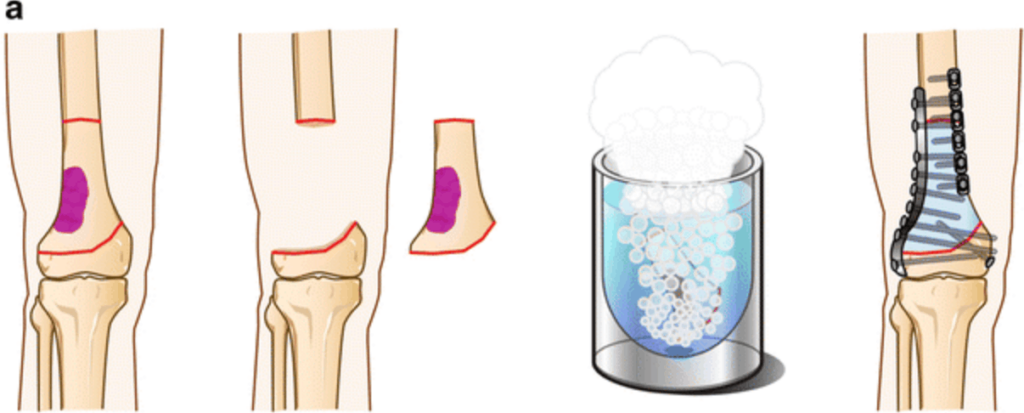
Surgical treatment for bone cancer using the Recycling Bones technique, also known as Recycled Autograft, allows patients to retain their bones. The steps are:
- Surgically removing the bone section with the tumor.
- Freezing the bone in liquid nitrogen at -196°C for 20 minutes to kill cancer cells.
- Thawing the bone.
- Strengthening the bone with bone cement and metal materials, such as steel.
- Reimplanting the treated bone into the patient’s body.
Advantages of this method include:
- Using the patient’s own bone, reducing immune rejection.
- Perfect bone fit for the patient.
- Preserving joint function and limb movement.
- Lower costs compared to artificial bones.
This method is suitable for bone cancer patients whose bones are not severely damaged and can potentially lead to a cure.
Importance of Early Diagnosis
Early diagnosis of bone marrow cancer is vital for treatment outcomes and survival chances. Initial symptoms may be nonspecific, such as fatigue, easy tiredness, or back pain without a known cause. Therefore, being aware of bodily abnormalities and consulting a doctor promptly is essential. Diagnostic tests may include:
- Detailed blood tests
- Bone marrow examination
- Genetic testing of cancer cells
- Imaging tests to assess disease spread
Accurate and swift diagnosis allows doctors to plan appropriate treatments in a timely manner, potentially increasing the chances of controlling the disease and extending the patient’s life.
Monitoring back pain closely and consulting a doctor when abnormal symptoms arise is crucial for preventing and treating serious bone-related diseases like bone marrow cancer. This disease is often detected at an advanced stage, reducing the chances of a cure. Therefore, awareness and regular health care can improve treatment outcomes and long-term quality of life.
Read our articles
Read other related articles
- Lower Back Pain: Could It Be Cancer? by Christina Chun, MPH — Written by Rachel Nall, MSN, CRNA
- The link between back pain and cancer by The Health News Team
- Lower back pain and cancer: Symptoms, diagnosis and treatment by Vinmec
- Upper back pain: Is it a sign of cancer? by Angela M. Bell, MD, FACP — Written by Ben Koprowski
- Cancer symptom: Three types of cancers that can cause back pain; know when to see a doctor by TIMESOFINDIA.COM